
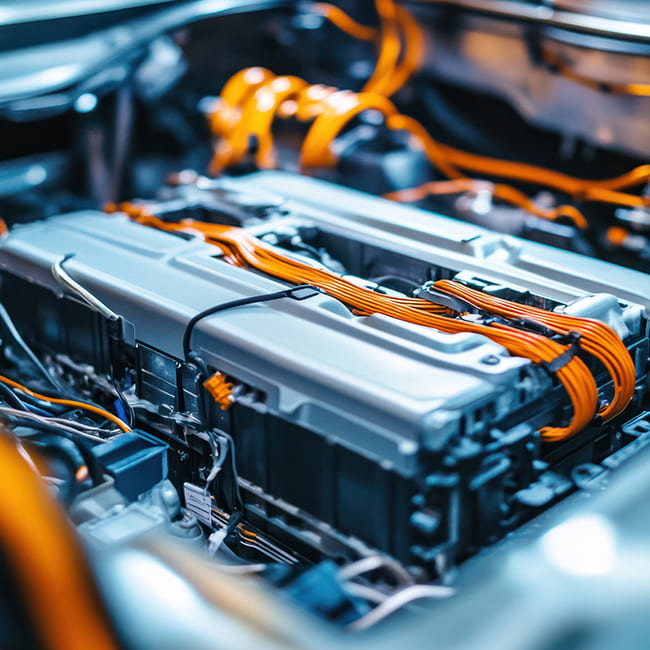
The combination of mechanics, electronics and digital technology
Connected mechatronics is at the heart of VIATEMIS’ innovations. It embodies our ability to create technical solutions that combine mechanical precision, electronic control and software intelligence.
These new-generation components enable automated management of critical vehicle functions, seamless interaction with on-board electronics and the ability to feed back data in real time to optimise usage.
A new generation of smart components
Our mechatronic products are designed to withstand demanding environments: vibrations, extreme temperatures, humidity, electromagnetic interference, etc., while incorporating advanced digital features.
Examples of embedded functions:
Electrically controlled with status feedback
Self-calibration and on-board diagnostics
Communication via CAN/LIN bus
Configurable internal logic for a response tailored to the context of use
These technologies are particularly suited to industrial, commercial, agricultural, marine, and specialised vehicles, including those subject to strict regulations (ADR, ATEX, etc.).
A design focused on integration and reliability
Our mechatronic solutions are designed to integrate easily into complex architectures:
-
compact and modular format,
-
robust and standardised connectors,
-
compatibility with on-board computers,
-
rigorous testing in the laboratory and in real-world conditions.
These high standards guarantee extended service life, ease of maintenance and assured regulatory compliance.
VIATEMIS, your partner in technological transformation
Our multidisciplinary teams (mechanical, electronic, embedded software) support you in your co-development, product redesign or digitisation projects for existing components.
We provide you with:
-
an integrated design office,
-
rapid prototyping capabilities,
-
a controlled production line,
-
and continuous technology monitoring.
Applications of our mechatronic systems
Power management
Remote controls (battery cut-off, relays, etc.)
Securing pneumatic or hydraulic circuits
Hardened human-machine interfaces
Automation of critical sequences (braking, locking, opening, etc.)